
Courses
14 courses available
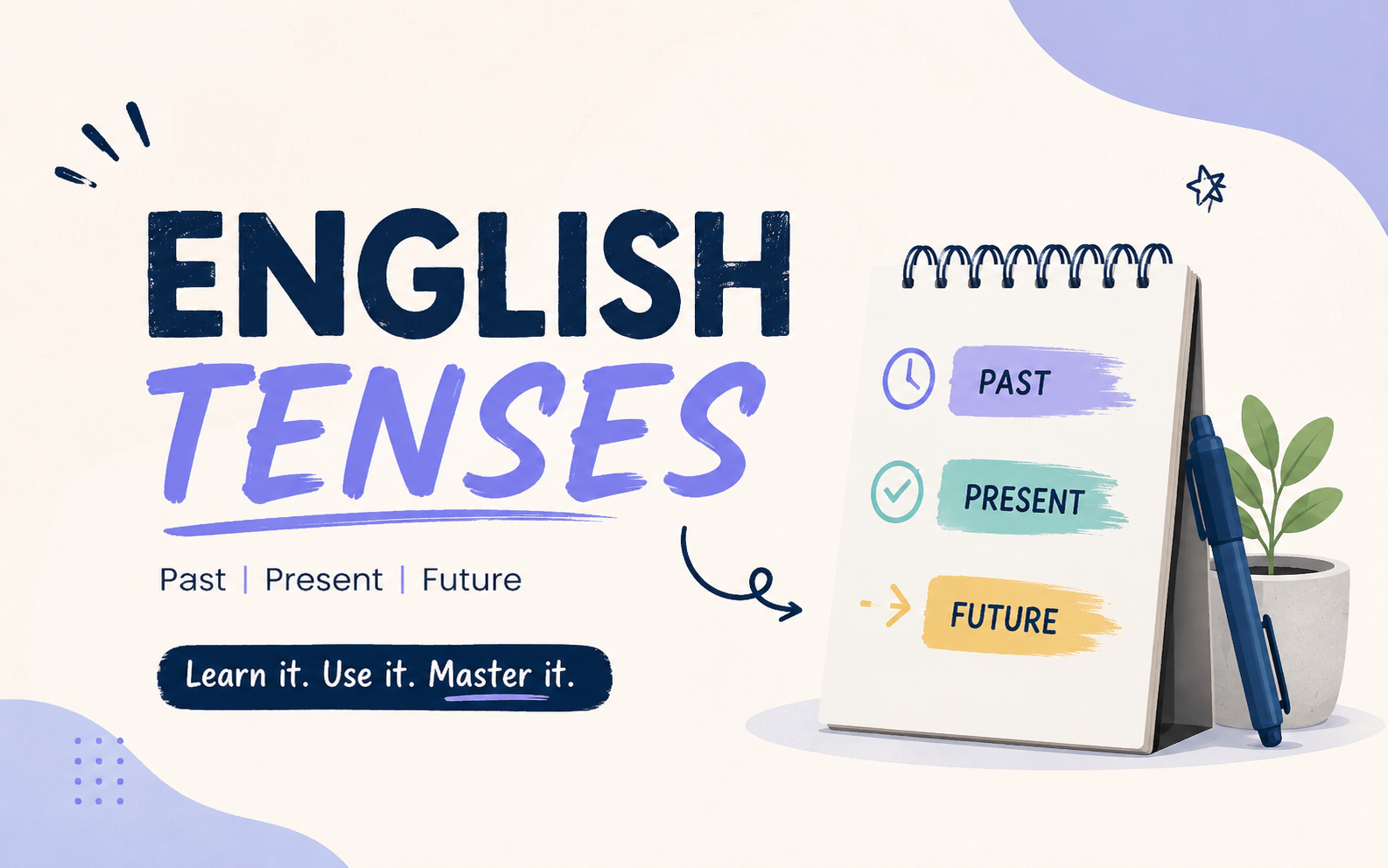 Master English Tenses
Master English tenses from beginner to intermediate level. In this 12-session course, students will learn how to use present, past, and future tenses correctly in speaking and writing. Each lesson includes clear explanations, practical examples, and interactive exercises to build confidence and fluency in everyday English communication.
Master English tenses from beginner to intermediate level. In this 12-session course, students will learn how to use present, past, and future tenses correctly in speaking and writing. Each lesson includes clear explanations, practical examples, and interactive exercises to build confidence and fluency in everyday English communication.
- Understand all major English tenses
- Use tenses accurately in speaking
- Use tenses correctly in writing
- Improve grammar confidence
- Recognize common tense mistakes
- Communicate more naturally in English
- 1 Introduction to English Tenses
- 2 Present Simple
- 3 Present Continuous
- 4 Present Perfect
- 5 Past Simple
- 6 Past Continuous
- 7 Past Perfect
- 8 Future Simple
- 9 Future Continuous
- 10 Future Perfect
- 11 Mixed Tense Practice
50 min
12-session program
 English for kids, starter
The first four units of the course introduce young learners to English through an engaging story-based approach. Students develop foundational language skills by learning greetings, introductions, animals, colors, family members, and everyday vocabulary. Throughout these units, learners practice listening, speaking, reading, and early writing skills while building confidence in using simple English expressions. The lessons also introduce the letters A–L and their sounds, helping students strengthen their phonics and alphabet knowledge. Through songs, games, stories, and interactive activities, students are encouraged to communicate, participate actively, and enjoy learning English in a fun and supportive environment.
The first four units of the course introduce young learners to English through an engaging story-based approach. Students develop foundational language skills by learning greetings, introductions, animals, colors, family members, and everyday vocabulary. Throughout these units, learners practice listening, speaking, reading, and early writing skills while building confidence in using simple English expressions. The lessons also introduce the letters A–L and their sounds, helping students strengthen their phonics and alphabet knowledge. Through songs, games, stories, and interactive activities, students are encouraged to communicate, participate actively, and enjoy learning English in a fun and supportive environment.
- By the end of the course, students will be able to:
- Recognize and pronounce all letters of the English alphabet.
- Identify basic letter sounds and connect sounds to words.
- Use everyday vocabulary related to animals, family, body parts, colors, numbers, and places.
- Follow simple classroom instructions and short stories.
- Ask and answer basic questions using simple sentence patterns.
- Read and understand beginner-level words and short texts.
- Demonstrate improved listening, speaking, reading, and early writing skills.
- Participate confidently in classroom activities using English.
- 1 Unit 1: The Story Begins (Aa–Cc)
- 2 Greetings and introductions
- 3 Names and basic conversations
- 4 Letter recognition: A, B, C
- 5 Developing early listening and speaking skills
- 6 Unit 2: Going Down the River (Dd–Ff)
- 7 Animals and nature vocabulary
- 8 Identifying and describing animals
- 9 Simple questions and answers
- 10 Letter recognition: D, E, F
- 11 Unit 3: Strange Sights (Gg–Ii)
- 12 Colors and descriptive words
- 13 Observing and describing objects
- 14 Expanding vocabulary through stories
- 15 Letter recognition: G, H, I
- 16 Unit 4: At the Castle (Jj–Ll)
- 17 Family members and relationships
- 18 Talking about people and possessions
- 19 Story-based comprehension activities
- 20 Letter recognition: J, K, L
50 min
20-session program
English for kids, starter
Units 5–9 continue the learners’ English language journey through exciting adventures and meaningful story-based learning. Throughout these units, students expand their vocabulary by exploring topics such as body parts, helping others, locations, directions, numbers, daily activities, and problem-solving. They strengthen their communication skills by asking and answering simple questions, describing people and places, and following instructions. Learners also complete their study of the alphabet by mastering the letters M–Z and developing greater phonics awareness. Through interactive games, songs, stories, and collaborative activities, students improve their listening, speaking, reading, and early writing skills while gaining confidence in using English in everyday situations.
Units 5–9 continue the learners’ English language journey through exciting adventures and meaningful story-based learning. Throughout these units, students expand their vocabulary by exploring topics such as body parts, helping others, locations, directions, numbers, daily activities, and problem-solving. They strengthen their communication skills by asking and answering simple questions, describing people and places, and following instructions. Learners also complete their study of the alphabet by mastering the letters M–Z and developing greater phonics awareness. Through interactive games, songs, stories, and collaborative activities, students improve their listening, speaking, reading, and early writing skills while gaining confidence in using English in everyday situations.
- By the end of Units 5–9, students will be able to:
- Recognize and correctly pronounce the letters M–Z and their corresponding sounds.
- Use vocabulary related to body parts, places, directions, numbers, daily activities, and problem-solving.
- Understand and respond to simple questions and instructions in English.
- Describe people, animals, objects, and locations using basic sentence structures.
- Ask for and give simple information about familiar topics.
- Follow story sequences and demonstrate comprehension of short texts.
- Use prepositions of place and directional language in simple contexts.
- Identify and use numbers, days of the week, and other essential language concepts.
- Participate actively in classroom conversations, games, songs, and storytelling activities.
- Demonstrate improved listening, speaking, reading, and early writing skills.
- Communicate with greater confidence and independence in everyday English situations.
- 1 Unit 5: Looking for Mama Koala (Mm–Oo)
- 2 Parts of the body
- 3 Describing people and animals
- 4 Asking and answering simple questions
- 5 Letter recognition: M, N, O
- 6 Unit 6: Finding Mama Koala (Pp–Rr)
- 7 Helping others and problem-solving
- 8 Review of previous vocabulary
- 9 Reading simple story sequences
- 10 Letter recognition: P, Q, R
- 11 Unit 7: Back at the Castle (Ss–Uu)
- 12 Prepositions of place
- 13 Giving and following directions
- 14 Understanding location and position
- 15 Letter recognition: S, T, U
- 16 Unit 8: Going Home (Vv–Xx)
- 17 Numbers 1–10
- 18 Ages and personal information
- 19 Daily activities and routines
- 20 Letter recognition: V, W, X
- 21 Unit 9: Looking for Figo (Yy–Zz)
- 22 Review and consolidation
- 23 Asking and answering simple questions
- 24 Building confidence in communication
- 25 Letter recognition: Y, Z
50 min
20-session program
 English for kids
The first four units of Hip Hip Hooray 1 provide young learners with a strong foundation in English through engaging stories, songs, games, and interactive activities. Students learn essential vocabulary and language structures related to greetings, animals, birthdays, numbers, actions, and abilities. These units focus on developing basic communication skills while encouraging learners to use English confidently in familiar situations. Through a variety of listening, speaking, reading, and writing tasks, students build their language skills in a fun and supportive learning environment.
The first four units of Hip Hip Hooray 1 provide young learners with a strong foundation in English through engaging stories, songs, games, and interactive activities. Students learn essential vocabulary and language structures related to greetings, animals, birthdays, numbers, actions, and abilities. These units focus on developing basic communication skills while encouraging learners to use English confidently in familiar situations. Through a variety of listening, speaking, reading, and writing tasks, students build their language skills in a fun and supportive learning environment.
- By the end of Units 1–4, students will be able to:
- Greet others and introduce themselves using simple English expressions.
- Ask and answer basic personal questions.
- Identify and name common animals and everyday objects.
- Use yes/no questions and short answers appropriately.
- Recognize and use numbers to talk about age and birthdays.
- Talk about celebrations and special occasions using familiar vocabulary.
- Use can and can't to describe abilities and actions.
- Understand and follow simple classroom instructions.
- Participate in short conversations and role-play activities.
- Demonstrate improved listening, speaking, reading, and early writing skills.
- Build confidence in communicating in English with teachers and classmates.
- 1 Unit 1: Sam and Sally Meet
- 2 Greetings and introductions
- 3 Names and simple personal information
- 4 Basic classroom language
- 5 Listening and speaking practice
- 6 Unit 2: Is It a Cat?
- 7 Animals vocabulary
- 8 Asking and answering yes/no questions
- 9 Identifying objects and animals
- 10 Simple descriptive language
- 11 Review: Units 1 & 2
- 12 Unit 3: Sam's Birthday
- 13 Birthday celebrations
- 14 Numbers and age
- 15 Party-related vocabulary
- 16 Talking about special occasions
- 17 Unit 4: Sally Can Climb
- 18 Actions and abilities
- 19 Using can / can't
- 20 Sports and activities
- 21 Describing what people can do
- 22 Review: Units 3 & 4
50 min
20-session program
 English for kids
Units 5–8 of Hip Hip Hooray 1 help students expand their English skills through real-life topics and interactive learning experiences. Learners explore vocabulary related to everyday objects, city places, shopping, and outdoor activities. They practice asking and answering questions, describing locations, and talking about familiar environments. Through engaging stories, games, songs, and communicative activities, students continue to develop their listening, speaking, reading, and writing skills while becoming more confident in using English for everyday communication.
Units 5–8 of Hip Hip Hooray 1 help students expand their English skills through real-life topics and interactive learning experiences. Learners explore vocabulary related to everyday objects, city places, shopping, and outdoor activities. They practice asking and answering questions, describing locations, and talking about familiar environments. Through engaging stories, games, songs, and communicative activities, students continue to develop their listening, speaking, reading, and writing skills while becoming more confident in using English for everyday communication.
- By the end of Units 5–8, students will be able to:
- Identify and name common classroom and everyday objects.
- Use this, that, these, and those to talk about objects.
- Distinguish between singular and plural nouns.
- Recognize and describe places in a city and community.
- Ask and answer simple questions about locations and places.
- Use vocabulary related to shopping and public places.
- Participate in basic shopping and everyday conversations.
- Describe activities and locations in a park or outdoor setting.
- Follow and respond to simple spoken and written instructions.
- Read and understand short texts related to familiar topics.
- Demonstrate improved confidence in listening, speaking, reading, and writing in English.
- 1 Unit 5: What Are These?
- 2 Classroom and everyday objects
- 3 Singular and plural nouns
- 4 Demonstratives: this, that, these, those
- 5 Asking and answering questions about objects
- 6 Unit 6: It's the City!
- 7 Places in a city
- 8 Location vocabulary
- 9 Describing places and surroundings
- 10 Reading simple maps and signs
- 11 Review: Units 5 & 6
- 12 Unit 7: At the Mall
- 13 Shopping vocabulary
- 14 Stores and public places
- 15 Asking for items
- 16 Everyday conversations
- 17 Unit 8: In the Park
- 18 Nature and outdoor activities
- 19 Park-related vocabulary
- 20 Describing actions and locations
- 21 Speaking about leisure activities
- 22 Review: Units 7 & 8
50 min
20-session program
 English for kids
Hip Hip Hooray! 2 is designed for young learners who have successfully completed the starter level or have a basic foundation in English. Through engaging stories, songs, games, hands-on activities, and interactive lessons, students continue to develop their listening, speaking, reading, and writing skills in a fun and supportive environment. The course expands children's vocabulary, strengthens their grammar, and builds confidence in using English for everyday communication. Learners are encouraged to participate actively, work collaboratively, and express themselves through meaningful language practice while developing essential 21st-century skills such as creativity, critical thinking, and teamwork.
Hip Hip Hooray! 2 is designed for young learners who have successfully completed the starter level or have a basic foundation in English. Through engaging stories, songs, games, hands-on activities, and interactive lessons, students continue to develop their listening, speaking, reading, and writing skills in a fun and supportive environment. The course expands children's vocabulary, strengthens their grammar, and builds confidence in using English for everyday communication. Learners are encouraged to participate actively, work collaboratively, and express themselves through meaningful language practice while developing essential 21st-century skills such as creativity, critical thinking, and teamwork.
- :
- Use vocabulary related to toys, bedtime routines, feelings, colors, shapes, and sports equipment.
- Ask and answer simple questions about personal belongings, daily activities, and preferences.
- Describe people and objects using basic adjectives and simple sentences.
- Understand and follow short conversations, classroom instructions, and stories.
- Express likes, wants, and simple opinions with increasing confidence.
- Read and understand short texts and dialogues using familiar vocabulary.
- Write simple words, phrases, and short sentences with correct spelling and punctuation.
- Use key grammar structures, including present simple, there is/there are, demonstratives (this, that, these, those), adjectives, and basic question forms.
- Improve pronunciation, listening, speaking, reading, and writing skills through interactive songs, games, and communicative activities.
- Build confidence in communicating in English while developing cooperation, creativity, and critical thinking skills.
- 1 Curriculum (Units 1–4)
- 2 Unit 1: At the Toy Store
- 3 Toy vocabulary
- 4 Colors and shapes
- 5 Describing toys
- 6 Demonstratives (this, that, these, those)
- 7 Asking and answering simple questions
- 8 Listening and speaking practice
- 9 Reading short dialogues
- 10 Guided writing activities
- 11 Unit 2: Late at Night
- 12 Bedtime routines
- 13 Daily activities
- 14 Action verbs
- 15 Feelings and emotions
- 16 Present Simple
- 17 Listening to stories
- 18 Reading comprehension
- 19 Writing simple sentences
- 20 Unit 3: Surprise!
- 21 Birthday and celebration vocabulary
- 22 Family members
- 23 Gifts and party items
- 24 Expressing feelings and emotions
- 25 Asking and answering questions
- 26 Story-based learning
- 27 Reading and speaking activities
- 28 Guided writing practice
- 29 Unit 4: That Ball Is Cool!
- 30 Sports and games vocabulary
- 31 Sports equipment
- 32 Describing objects with adjectives
- 33 Expressing likes and preferences
- 34 Speaking about favorite activities
- 35 Listening comprehension
- 36 Reading short texts
- 37 Writing simple descriptions
- 38 Integrated Skills
- 39 Vocabulary Development
- 40 Grammar in Context
- 41 Listening
- 42 Speaking
- 43 Reading
- 44 Writing
- 45 Pronunciation
- 46 Songs and Chants
- 47 Games and Role-play
- 48 Review and Assessment
50 min
20-session program
 English for kids
The second half of Hip Hip Hooray! 2 helps young learners expand their English through engaging stories, real-life topics, songs, games, and interactive activities. Students build stronger communication skills while developing confidence in listening, speaking, reading, and writing. The lessons encourage creativity, teamwork, and meaningful language use in everyday situations.
The second half of Hip Hip Hooray! 2 helps young learners expand their English through engaging stories, real-life topics, songs, games, and interactive activities. Students build stronger communication skills while developing confidence in listening, speaking, reading, and writing. The lessons encourage creativity, teamwork, and meaningful language use in everyday situations.
- By the end of Units 5–8, students will be able to:
- Use vocabulary related to jobs, community helpers, creativity, photography, safety, and outdoor activities.
- Talk about people, places, and everyday situations using simple sentences.
- Ask and answer questions with greater confidence.
- Describe actions, people, and objects using appropriate adjectives and verbs.
- Read and understand short stories and informational texts.
- Write simple sentences and short paragraphs using familiar vocabulary.
- Improve listening comprehension through songs, dialogues, and classroom activities.
- Apply key grammar structures accurately in everyday communication.
- Develop pronunciation, fluency, teamwork, and communication skills.
- 1 Unit 5: Who Makes the Toys?
- 2 Community helpers
- 3 Jobs and occupations
- 4 Places of work
- 5 Action verbs
- 6 Asking and answering questions about jobs
- 7 Listening and speaking activities
- 8 Reading short texts
- 9 Guided writing
- 10 Unit 6: A Nice Idea
- 11 Creativity and making things
- 12 Classroom projects
- 13 Giving suggestions
- 14 Sequencing actions
- 15 Speaking and collaboration
- 16 Reading instructions
- 17 Writing simple descriptions
- 18 Unit 7: Say "Cheese!"
- 19 Photography vocabulary
- 20 Family and friends
- 21 Describing people and pictures
- 22 Present Continuous for actions
- 23 Listening and speaking practice
- 24 Reading picture stories
- 25 Guided writing
- 26 Unit 8: Watch Out!
- 27 Safety rules
- 28 Outdoor activities
- 29 Warning signs
- 30 Giving advice and instructions
- 31 Listening comprehension
- 32 Reading informational texts
- 33 Writing simple safety rules
- 34 Integrated Skills
- 35 Vocabulary Development
- 36 Grammar in Context
- 37 Listening
- 38 Speaking
- 39 Reading
- 40 Writing
- 41 Pronunciation
- 42 Songs and Chants
- 43 Games and Role-play
- 44 Review and Assessment
50 min
20-session program
 English for kids
The first four units of Hip Hip Hooray! introduce young learners to exciting adventures through engaging stories, interactive activities, songs, and games. Students develop essential English communication skills while exploring everyday topics such as home, shopping, surprises, and exciting places. The lessons focus on building vocabulary, improving grammar, and increasing confidence in listening, speaking, reading, and writing. Learners are encouraged to communicate naturally, think creatively, and enjoy using English in meaningful real-life contexts.
The first four units of Hip Hip Hooray! introduce young learners to exciting adventures through engaging stories, interactive activities, songs, and games. Students develop essential English communication skills while exploring everyday topics such as home, shopping, surprises, and exciting places. The lessons focus on building vocabulary, improving grammar, and increasing confidence in listening, speaking, reading, and writing. Learners are encouraged to communicate naturally, think creatively, and enjoy using English in meaningful real-life contexts.
- By the end of Units 1–4, students will be able to:
- Use vocabulary related to home, family, food, shopping, rooms, and places.
- Ask and answer simple questions about everyday situations with increasing confidence.
- Describe people, places, and objects using simple sentences and appropriate adjectives.
- Understand and follow short conversations, stories, and classroom instructions.
- Read and comprehend short texts and dialogues using familiar vocabulary.
- Write simple words, phrases, and short sentences with correct spelling and basic punctuation.
- Use key grammar structures, including Present Simple, prepositions of place, there is/there are, question forms, and basic descriptive language.
- Improve listening, speaking, reading, and writing skills through songs, games, role-plays, and interactive activities.
- Develop confidence, creativity, collaboration, and effective communication skills while using English in meaningful contexts.
- 1 Unit 1: At Jack's House
- 2 House and home vocabulary
- 3 Family members
- 4 Rooms in the house
- 5 Prepositions of place
- 6 Asking and answering questions about home
- 7 Listening and speaking activities
- 8 Reading short dialogues
- 9 Guided writing practice
- 10 Unit 2: At the Market
- 11 Food and shopping vocabulary
- 12 Fruits and vegetables
- 13 Numbers and prices
- 14 Asking for and buying items
- 15 Listening comprehension
- 16 Reading simple conversations
- 17 Writing words and short sentences
- 18 Unit 3: Morning Surprise
- 19 Morning routines
- 20 Daily activities
- 21 Action verbs
- 22 Present Simple
- 23 Story-based learning
- 24 Speaking and pronunciation practice
- 25 Reading comprehension
- 26 Guided writing
- 27 Unit 4: Inside the Castle
- 28 Places and rooms
- 29 Describing locations
- 30 Prepositions of place
- 31 Giving simple descriptions
- 32 Listening and speaking activities
- 33 Reading short texts
- 34 Writing simple descriptions
- 35 Integrated Skills
- 36 Vocabulary Development
- 37 Grammar in Context
- 38 Listening
- 39 Speaking
- 40 Reading
- 41 Writing
- 42 Pronunciation
- 43 Songs and Chants
- 44 Games and Role-play
- 45 Review and Assessment
50 min
20-session program
 English for kids
The second half of the course continues Jack’s exciting adventure while helping young learners strengthen their English communication skills. Through engaging stories, interactive activities, songs, and games, students expand their vocabulary, improve grammar, and develop greater confidence in listening, speaking, reading, and writing. The lessons encourage critical thinking, problem-solving, teamwork, and meaningful communication in real-life contexts.
The second half of the course continues Jack’s exciting adventure while helping young learners strengthen their English communication skills. Through engaging stories, interactive activities, songs, and games, students expand their vocabulary, improve grammar, and develop greater confidence in listening, speaking, reading, and writing. The lessons encourage critical thinking, problem-solving, teamwork, and meaningful communication in real-life contexts.
- By the end of Units 5–8, students will be able to:
- Use vocabulary related to home, travel, adventure, family, directions, and everyday activities.
- Describe people, places, and events using simple English.
- Ask and answer questions with greater confidence and accuracy.
- Understand and respond to short stories, conversations, and classroom instructions.
- Read and comprehend short texts using familiar vocabulary and grammar.
- Write simple sentences and short paragraphs about familiar topics.
- Apply key grammar structures, including Present Simple, prepositions, question forms, sequencing words, and descriptive language.
- Improve pronunciation, fluency, and communication skills through interactive speaking activities.
- Develop confidence, creativity, collaboration, and problem-solving skills while using English.
- 1 Unit 5: Back at Home
- 2 Home and family vocabulary
- 3 Daily activities
- 4 Household routines
- 5 Present Simple review
- 6 Listening and speaking activities
- 7 Reading short texts
- 8 Guided writing practice
- 9 Unit 6: Jack Finds Dad's Gold
- 10 Adventure vocabulary
- 11 Giving and following directions
- 12 Sequencing events
- 13 Story-based learning
- 14 Listening comprehension
- 15 Reading activities
- 16 Writing simple sentences
- 17 Unit 7: Jack Frees Dad
- 18 Action verbs
- 19 Problem-solving language
- 20 Describing actions and events
- 21 Speaking through role-play
- 22 Reading story dialogues
- 23 Guided writing
- 24 Unit 8: Flying Home
- 25 Travel and transportation
- 26 Journey vocabulary
- 27 Reviewing key grammar and vocabulary
- 28 Listening and speaking practice
- 29 Reading comprehension
- 30 Writing simple descriptions
- 31 Integrated Skills
- 32 Vocabulary Development
- 33 Grammar in Context
- 34 Listening
- 35 Speaking
- 36 Reading
- 37 Writing
- 38 Pronunciation
- 39 Songs and Chants
- 40 Games and Role-play
- 41 Review and Assessment
50 min
20-session program
 English for kids
In the first four units, students learn everyday English through Tina's exciting adventure. They practice talking about daily routines, describing homes, meeting friends, and exploring the sea. The lessons introduce useful vocabulary, simple grammar, songs, dialogues, and engaging activities that help children improve their listening, speaking, reading, and writing skills in a fun and interactive way.
In the first four units, students learn everyday English through Tina's exciting adventure. They practice talking about daily routines, describing homes, meeting friends, and exploring the sea. The lessons introduce useful vocabulary, simple grammar, songs, dialogues, and engaging activities that help children improve their listening, speaking, reading, and writing skills in a fun and interactive way.
- By the end of Units 1–4, students will be able to:
- Talk about their daily routines using simple English.
- Identify and describe rooms, furniture, and household objects.
- Introduce friends and participate in simple conversations.
- Name common sea animals and describe basic features.
- Use the Present Simple to talk about everyday activities.
- Understand and follow simple classroom instructions.
- Read and understand short stories with confidence.
- Communicate using simple sentences in familiar situations.
- 1 Daily routines and morning activities
- 2 Rooms and objects in the house
- 3 Family and friends
- 4 Meeting and greeting people
- 5 Sea animals and nature vocabulary
- 6 Present Simple for everyday actions
- 7 Prepositions of place
- 8 Listening, speaking, reading, and writing practice
- 9 Songs, chants, games, and pair-work activities
- 10 Review and reinforcement of Units 1–4
50 min
20-session program
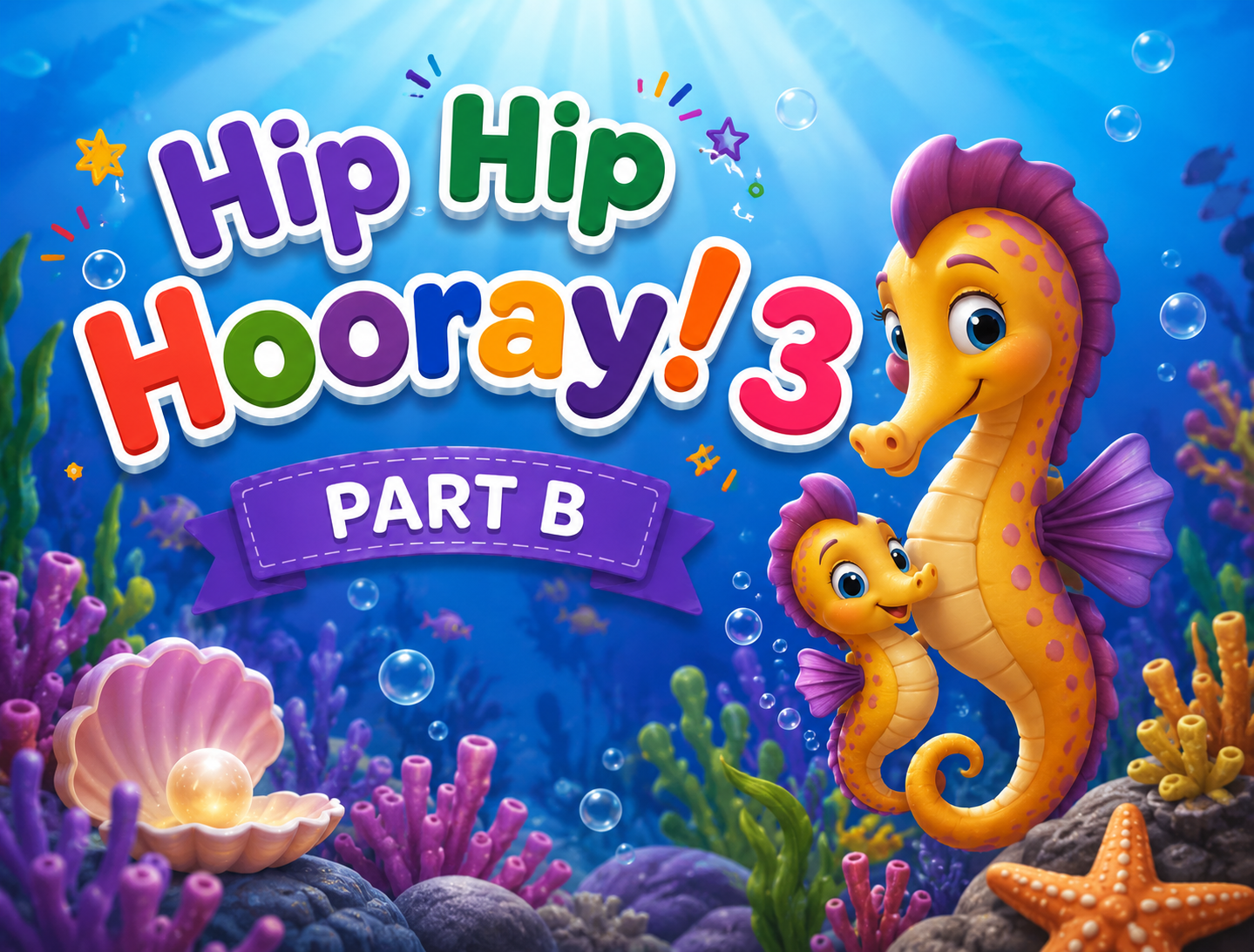 English for kids
In Units 5–8, students continue Tina’s exciting adventure while developing stronger communication skills. They learn to solve problems, help others, and talk about actions, feelings, and events. Through engaging stories, songs, games, and interactive activities, learners expand their vocabulary, improve grammar accuracy, and build confidence in using English in everyday situations.
In Units 5–8, students continue Tina’s exciting adventure while developing stronger communication skills. They learn to solve problems, help others, and talk about actions, feelings, and events. Through engaging stories, songs, games, and interactive activities, learners expand their vocabulary, improve grammar accuracy, and build confidence in using English in everyday situations.
- By the end of Units 5–8, students will be able to:
- Describe actions and events using simple English.
- Talk about animals and nature with appropriate vocabulary.
- Express feelings and emotions confidently.
- Ask and answer questions in everyday conversations.
- Follow and retell short stories in the correct sequence.
- Read and understand longer texts with greater confidence.
- Work cooperatively in pair and group activities.
- Use English more fluently and confidently in classroom communication.
- 1 Adventure and action vocabulary
- 2 Animals and wildlife
- 3 Helping others and teamwork
- 4 Feelings and emotions
- 5 Storytelling and sequencing events
- 6 Present Simple and Present Continuous review
- 7 Asking and answering questions
- 8 Listening and reading comprehension
- 9 Speaking through role-play and pair work
- 10 Writing short sentences and descriptions
- 11 Songs, games, and review activities
50 min
20-session program
 English for kids
In the first four units, students begin an exciting island adventure while developing essential English communication skills. They learn vocabulary related to the sea, islands, family, and everyday situations through engaging stories, songs, games, and interactive activities. These lessons help young learners build confidence in listening, speaking, reading, and writing while encouraging teamwork, curiosity, and problem-solving.
In the first four units, students begin an exciting island adventure while developing essential English communication skills. They learn vocabulary related to the sea, islands, family, and everyday situations through engaging stories, songs, games, and interactive activities. These lessons help young learners build confidence in listening, speaking, reading, and writing while encouraging teamwork, curiosity, and problem-solving.
- By the end of Units 1–4, students will be able to:
- Identify and describe places such as the sea and an island.
- Use everyday vocabulary to talk about people, places, and objects.
- Ask and answer simple questions with confidence.
- Follow and understand short stories and classroom instructions.
- Read and understand short texts using familiar vocabulary.
- Write simple words and sentences related to the lesson topics.
- Participate in conversations and role-play activities using basic English.
- Demonstrate increased confidence in communicating in English through fun, interactive tasks.
- 1 Sea and island vocabulary
- 2 Family members and everyday conversations
- 3 Describing places and locations
- 4 Asking and answering simple questions
- 5 Present Simple for daily communication
- 6 Prepositions of place and direction
- 7 Listening and reading comprehension
- 8 Speaking through dialogues and role-play
- 9 Writing simple words and sentences
- 10 Songs, games, and review activities
- 11 Review and reinforcement of Units 1–4
50 min
20-session program
 English for kids
In Units 5–8, students continue their exciting island adventure as they search for Celine, meet new friends, and discover a ship. Through engaging stories, collaborative activities, songs, and games, learners expand their vocabulary, strengthen their grammar, and improve their confidence in using English to communicate in meaningful, real-life situations.
In Units 5–8, students continue their exciting island adventure as they search for Celine, meet new friends, and discover a ship. Through engaging stories, collaborative activities, songs, and games, learners expand their vocabulary, strengthen their grammar, and improve their confidence in using English to communicate in meaningful, real-life situations.
- By the end of Units 5–8, students will be able to:
- Talk about adventures, travel, and familiar places using appropriate vocabulary.
- Describe people, locations, and events with simple English.
- Ask and answer questions confidently in everyday conversations.
- Follow and retell a story in the correct sequence.
- Understand and respond to short spoken and written texts.
- Use the Present Simple and Present Continuous more accurately.
- Work cooperatively with classmates through communicative activities.
- Communicate more fluently and confidently in both spoken and written English
- 1 Adventure and rescue vocabulary
- 2 Travel and transportation (ship and island)
- 3 People and relationships
- 4 Giving and following directions
- 5 Asking and answering Wh- questions
- 6 Present Simple and Present Continuous practice
- 7 Listening and reading comprehension
- 8 Story sequencing and retelling
- 9 Speaking through pair work and role-play
- 10 Writing simple descriptions and short paragraphs
- 11 Review and reinforcement of Units 5–8
50 min
8-session program
The first four units introduce students to the main characters and the story while developing their English through engaging topics such as introductions, new places, nature, and adventure. Students build their vocabulary, improve their reading and listening skills, and practice speaking through meaningful classroom activities.
The first four units introduce students to the main characters and the story while developing their English through engaging topics such as introductions, new places, nature, and adventure. Students build their vocabulary, improve their reading and listening skills, and practice speaking through meaningful classroom activities.
- By the end of the first four units, students will be able to:
- Introduce themselves and others confidently.
- Use everyday vocabulary in context.
- Understand and discuss short stories.
- Describe people, places, and events.
- Ask and answer simple questions.
- Follow simple instructions and directions.
- Improve their listening, speaking, reading, and writing skills.
- Communicate more confidently in everyday English situations.
- 1 Family members and introductions
- 2 Sea, island, and jungle vocabulary
- 3 Describing people, places, and locations
- 4 Asking and answering simple questions
- 5 Present Simple for everyday communication
- 6 Prepositions of place and direction
- 7 Listening and reading comprehension
- 8 Speaking through dialogues and role-play
- 9 Writing simple words and sentences
- 10 Review and reinforcement of Units 1–4
50 min
20-session program